The most notable changes that occur in the fall, aside from the welcome cool days and the golden light, is the magic that mother nature performs with fall foliage. In addition to the color that comes from trees there are perennial plants and shrubs that change with the shorter days and cooler nights, as well as plants that wait to bloom. Here is a list of some of my favorite plants for Fall. Anenomes (Windflowers), both the Honorine Jobert Hybrid as well as one of the pink cultivars such as September Charm' (Anenome hupehensis) are both great fall bloomers.

Another Fall blooming favorite of mine is Sweet Autumn Clematis (Clematis paniculata).
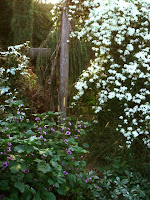 [photo via]
Caryopteris also holds out until late summer and into the fall to show it's vibrant blue blooms. I particularly like this variety, Caryopteris x clandonensis 'Sunshine Blue' with it's bright yellow foliage.
 Autumn Joy Sedum, Autumn Fire, Neon - are all upright cultivars belonging to the Sedum spectabilis species that bloom a nice salmon to magenta pink come late summer and into the fall. Another cultivar of sedum is Dragon's Blood (Sedum spurium) - the whole plant changes from green to a deep red. Like, well- Dragon's Blood!

Sedum Autumn Joy
 Dragon's Blood [Photo via & via]
Some Geraniums (the real Geranium, not Pelargoniums) have nice fall foliage; Sticky Geranium, a Utah native (Geranium virscosissimum), Geranium cantabrigiense species, as well as Geranium macrorrhizum such as Becans Geranium, all put on a great show.

[Geranium catabrigiense, photo via]
Coral Bells (Heuchera) show their unique color all summer long, but as the colors around them change these plants stand out.
 [L-R 'Amber Waves','Obsidian','Purple Petticoats','Lime Rickey'; photo via and via]
Dog Wood's fall color ranges from fire red to deep purple, Cornus alba and Cornus sericea are the two species I am the most familiar with. Alba's are great for their variegated foliage. Sericea varieties are great for their red stems which are a great fall and winter additions to the garden, the common name for this species is Red Osier Dog Wood.


Fruiting trees and shrubs, like Service Berry for example, provide petty fruits along with their fall color. I am most familiar with the Utah Service Berry, Amelachier utahensis. All Service Berries show great fall foliage with small bright red berries coming on in late summer into early fall.

 [Photos from here]
Chokecherry as well as Sand Cherries (Prunus virginiana, Purnus costena) along with all cherries are heavily laden with fruit come fall. The special thing about these two cultivars is their smaller size (Chokecherries growing to 20-25', Sand Cherries only reaching 8-14') as well as their foliage color, each species has a purple leafed cultivar.
 Although Laurels are evergreen their fall fruit with it's deep purple color is another contrasting fall color.
 [Prunus laurocerasus]
Believe it or not it isn't too late to plant any of these plants! You can plan now for your show next year - consider using some of these plants in your garden to extend your garden's beauty through the fall months.

 Brunnera macrophylla with it's spotted leaves and appropriate pastel blue flowers are a sweet addition to the spring garden, working well with the yellow and orange hues of daffodils. Quickly grows 12" in height.

 Heather or Erica darlyensis is a fantastic low growing shrub-like perennial. Unlike these other plants, Heather will maintain an interesting texture in the garden, giving it purpose outside of it's bloom time, in this designer's humble opinion that is.
 What plants are you noticing in bloom?


